Showing posts with label Affinity. Show all posts

Monday, October 14, 2019

Some hitherto unkown genealogical trees of music


In last week's post, I discussed Petter Hellström's recent doctoral thesis: Trees of Knowledge: Science and the Shape of Genealogy. In this thesis he discusses three "genealogical tees" in detail. Augustin Augier’s tree of plant families and Félix Gallet’s family tree of languages have already been covered in this blog (you can look them up using the Search box, to the right), but Henri Montan Berton’s family tree of chords has not.

Indeed, the historical literature at large has pretty much ignored the idea of a genealogical tree being associated with music. Nevertheless, the tree itself is explicitly labeled a Genealogical Tree of Chords. This tree, and its predecessor by François Guillaume Vial, thus deserve examination.


Henri Montan Berton (1767–1844) is well known within the history of music; and his tree was published as an independent broadsheet as two (almost identical) editions in c. 1807 and 1815. It seems to have been produced as a teaching tool, as indeed were also the trees of Augier and Gallet. As Petter Hellström notes, for these authors "genealogy did not necessarily involve chronology or change ... the introduction of family trees into secular knowledge production had more to do with the needs of information management, visualisation and communication".

Berton himself states (translated from the French):
In composing the Genealogical Tree, one has has had the intention to present to the eye, at a single glance, the reunion of the great family of Chords, and to demonstrate to the eye that there is only one Primordial [Chord], and that it is the source of all Harmonies.
At the base of the tree is a fundamental bass note along with its 12th and 17th major — this was the harmonic series in 18th century music theory. From here the tree produces 8 branches above, each labeled (at the bottom) with a musical chord, and with another 20 chords labeled further up the branches (all highlighted by arrows at the left). The main trunk (denoted A) is labeled Perfect or Constant Chord. The eight branches are intended to show the relationships between "8 fundamental chords [bottom arrow] and 20 inverted chords [the upper arrows]".

The tree thus displays the harmonic relationships among the chords, rather than any sort of chronological development. It was devised as an aid to learning the fundamentals of music composition.

Berton was not the first to use this idea within music theory. Four decades earlier, in 1766, François Guillaume Vial (1725–?) had produced another broadsheet, this time labeled Genealogical Tree of Harmony.


Like Berton's tree, this is not about chronology, but is about "family relationships" in a different sense. Moreover, in this instance the branching aspect of the tree is abandoned, and the tree foliage is simply festooned with medallions, labeled with chords — it is the different sections of the tree's crown that show relationships, not different branches.

The objective here was to illustrate "the most natural order of harmonic modulation", once again devised as a teaching tool. The two compass roses at the bottom left and right show the circle of fifths (left), guiding horizontal modulation among the chords, and the circle of thirds (right), guiding vertical modulation among the chords.

Vial himself states (translated from the French):
This Genealogical Tree simplifies and allows those who are capable of intonation [to practice] the art of preluding not only on a leading note, but even to change between the most desired modulations of any instrument.
Hellström traces these uses of the "family tree" metaphor in music back to Jean-Philippe Rameau (1683–1764), an influential music theorist. Thus, he concludes that we should:
read the trees of Vial and Berton as graphical codifications of an already established metaphor and manner of thinking about harmony, especially as both authors were informed by Rameau in their understanding of harmony in the first place.
In constructing their respective tree diagrams, Berton and Vial both seized upon an already existing metaphor and made it visible on paper. Their trees are not 'genealogical' in the sense that they charted family history or cross-generational relationships, they are 'genealogical' in the sense that they depict presumably natural, organic relationships, in which every part has its place in the whole, and where every part can be referred back to a common source or root.
These trees do not, therefore, fit into the usual history of genealogical trees, as this blog recognizes them, denoting a chronological history. They, would, however, fir neatly into the post on Relationship trees drawn like real trees.

Monday, September 30, 2013

Affinity networks updated


Last year I published a post on Networks of affinity rather than genealogy, in which I listed the publications from 1750-1900 that I know contain affinity networks. These are non-directional networks showing affinity among taxa, rather than showing genealogical relationships among the taxa.

Affinity refers to a natural (rather than artificial) overall group resemblance, usually quantified (in modern terminology) by some sort of weighted similarity of characters. Patterns of affinity may, indeed, result from evolutionary relationships, but affinity is a much broader concept than genealogy — in particular, affinity relationships are usually multi-directional rather than nested. This distinction between affinity and genealogy runs throughout the history of depictions of biological relationships, and continues to this day.

The importance that I see in these historical networks is that they match closely the modern idea of unrooted data-display networks. In this post I update my list of affinity networks, and add some more notes about their origins.

Maps versus networks

The important point here is that affinity is usually imagined as being multi-facetted, so that any diagram of affinities shows multiple connections among the taxa, and relationships between groups are very definitively reticulating. However, one point that I did not sufficiently emphasize in the previous blog post is that there are all sorts of other representations of reticulate relationships that have been used by biologists, some intended to be solid figures with faces, others are interlocking circles or radiating hexagons or nested ovals, and some have been explicitly referred to as maps. There is also what are referred to as quinarian classifications, in which taxa are arranged in groups of five that show multiple relationships.

Most of these diagrams could be converted to a network graphical representation. However, a network diagram should strictly have relationships indicated solely by connecting lines, rather than by overlapping circles, etc. That is, we can distinguish between networks in the strict sense and what are usually called "maps" in the broad sense. The latter name comes from Carl von Linné (see the quotation below). So, both networks and maps show reticulate relationships, but networks are still connected by lines even when any enclosing structure of groups is deleted.

I have used this strict definition of networks to update my list of affinity networks. This differs from the list in the previous post mainly by deleting two publications (which are better considered as maps not networks) and adds two more networks.

Affinity networks

Here is a list of the publications from 1750-1900 containing affinity networks that I know about. I have indicated my source, and I have also linked to an online copy of the diagram. (I have extracted some of the figures from Gallica, Google Books or the Biodiversity Heritage Library, where they are otherwise unavailable online.)
  • 1774 Johann Philipp Rühling "Ordines Naturales Plantarum Commentatio Botanica" [Ragan Fig. 7, Stevens Fig. 12, Barsanti Fig. 26, Pietsch Fig. 18]
  • 1777 Johann Hermann "Tabula affinitatum animalium" [Barsanti Fig. 31] republished in 1783 [Ragan Fig. 8]
  • 1802 August Johann Georg Carl Batsch "Tabula Affinitatum Regni Vegetabilis" [Ragan Fig. 9, Barsanti Fig. 43, Pietsch Fig. 19]
  • 1825 Adrien-Henri-Laurent de Jussieu "Sur le groupe des Rutacées." Mémoires du Muséum d'Histoire Naturelle 12: 384-542 [Ragan Fig. 13, Stevens Fig. 10, Pietsch Fig. 30]
  • 1826 Leopold Joseph Franz Johann Fitzinger "Neue Classification der Reptilien" [Gaffney Fig. 2]
  • 1841 Eduard Fenzl "Darstellung und Erläuterung vier minder bekannter, ihrer Stellung im natürlichen Systeme nach bisher zweifelhaft gebliebener, Pflanzen-Gattungen." Denkschriften der Königlich-Baierischen Botanischen Gesellschaft zu Regensburg 3: 153-270 [Stevens, figure]
  • 1843 Adrien-Henri-Laurent de Jussieu "Monographie de la famille des Malpighiacées." Archives du Muséum d'Histoire Naturelle 3: 5-151 [Stevens, figure]
  • 1844 Henri Milne-Edwards "Considérations sur quelques principes relatifs à la classification naturelle des animaux et plus particulièrement sur la distribution méthodique des mammifères." Annales des Sciences Naturelles, Sér 3 Zoologique 1: 65-99 [Barsanti Fig. 59, figure]
  • 1872 Alexander Andrejewitch von Bunge "Die gattung Acantholimon Boiss." Mémoires du Academie Imperiale des Sciences de St Pétersbourg Série 7 18(2): 1-72 [Stevens Fig. 19]
  • 1888 Ferdinand Albin Pax "Monographische übersicht über die arten der gattung Primula." Botanische Jahrbücher für Systematik, Pflanzengeschichte und Pflanzengeographie 10: 75-241 [Stevens, there are 15 figures]
  • 1889 Julien Vesque "Epharmosis, sive Materiae ad Instruendam Anatomiam Systematis Naturalis. Pars Prima. Folia Capparearum" [Stevens, figure]
  • 1889 Julien Vesque "Epharmosis, sive Materiae ad Instruendam Anatomiam Systematis Naturalis. Pars Secunda. Genitalia Foliaque Garciniearum et Calophyllearum" [Stevens, figure]
  • 1890 Franz Georg Philipp Buchenau "Monographia Juncacearum." Botanische Jahrbücher für Systematik, Pflanzengeschichte und Pflanzengeographie 12: 1-495 [Stevens, figure]
  • 1893 Georg Klebs "Flagellatenstudien, Theil II." Zeitschrift für Wissenschaftliche Zoologie 55: 353-445 [Ragan Fig. 26]
  • 1895 Olga Tchouproff "Quelques notes sur l'anatomie systématique des Acanthacées." Bulletin de l'Herbier Boissier 3: 550-560 [Stevens, figure]
  • 1896 Nicolai Ivanovich Kusnezov "Subgenus Eugentiana Kusnez. generis Gentiana Tournef." Acta Horti Petropolitani 15: 1-507 [Ragan, Stevens Fig. 18, Pietsch Fig. 91]
  • 1898 Émile Constant Perrot "Anatomie comparée des Gentianacées." Annales des Sciences Naturelles: Botanique, Série 8, 7: 105-292 [Stevens, figure]

Some historical notes

Other early authors described biological relationships as being like a reticulating network, without any necessarily genealogical interpretation, even though they apparently did not themselves produce network diagrams. (It seems that only 5 of the first 11 historical references to network relationships provided a diagram.) Here are some known examples (with source):
  • 1750 Vitaliano Donati "Della Storia Naturale Marina dell' Adriatico" [Ragan]
  • 1792 Giuseppe Olivi "Zoologia Adriatica" [Ragan]
  • 1802 Gottfried Reinhold Treviranus "Biologie, oder Philosophie der Lebenden Natur für Naturforscher und Aerzte, Band 1" [Ragan]
  • 1824 Johann Heinrich Friedrich Link "Elementa Philosophiae Botanicae" [Stevens]
  • 1828 Georges Cuvier "Histoire Naturelle des Poissons, Tome Premier" [Ragan]
  • 1836 Constantin Rafinesque "Flora Telluriana" [Stevens]
Note that it was apparently Vitaliano Donati who first suggested that biological relationships are like a network, although he did not provide an explicit diagram to illustrate this idea:
In addition, the links of the chain are joined in such a way with the links of another chain, that the natural progressions should have to be compared more to a net than to a chain, that net being, so to speak, woven with various threads which show, between them, changing communications, connections, and unions.” [Translated from the Italian by Ragan 2009]
This was followed immediately by a very similar idea from Carl Linnaeus (1751 "Philosophia Botanica"), who also did not provide a diagram:
Aphorism 77: All plants show affinities on either side, like territories in a geographical map. [Translated from the Latin]
The first figure of relationships drawn as a map was apparently Linnaeus' own map of plant families [see Barsanti Fig. 37, Pietsch Fig. 16], published by two of his former students, J.C. Fabricius and P.D. Giseke, in a posthumous collection of his lectures (Giseke 1792 "Caroli a Linné Praelectiones in Ordines Naturales Plantarum").

Modern phylogenetics has used a tree as the preferred means of depicting relationships, rather than a network or map. The tree metaphor seems to have first come from Peter Simon Pallas (1766 "Elenchus Zoophytorum"), who explicitly acknowledged the earlier ideas:
As Donati has already judiciously observed, the works of Nature are not connected in series in a Scale, but cohere in a Net. On the other hand, the whole system of organic bodies may be well represented by the likeness of a tree that immediately from the root divides both the simplest plants and animals, [which remain] variously contiguous as they advance up the trunk, Animals and Vegetables. [Translated from the Latin by Ragan 2009]
Note that the tree metaphor was explicitly intended by Pallas to be a simplification of the previously proposed network metaphor.

Actually, reticulating diagrams dominated over over trees in the literature until the publication of Charles Robert Darwin's major work (1859 "On the Origin of Species"). Darwin had two effects that are important for the discussion of metaphors.

First, he replaced the idea of an inherent order with a less ordered view of biodiversity as resulting from the contingencies of natural selection. This meant that the previous need for metaphors that allowed for multiple relationships among taxa (required to express the observed complexity of biodiversity), and hence the documented preference for reticulating diagrams (networks, maps, circles, cones, etc) was no longer needed. Darwin focused attention solely on genealogical relationships, to the exclusion of all others.

Second, Darwin championed the tree as the appropriate metaphor. This was possible because descent with modification can easily be expressed in a tree, provided that we focus (as he did) on vertical genealogical relationships (ancestor–descendant) rather than horizontal ones. One of his most famous quotes is:
The affinities of all the beings of the same class have sometimes been represented by a great tree ... The green and budding twigs may represent existing species), and those produced during each former year may represent the long succession of extinct species.
Darwin knew about horizontal evolutionary events like hybridization, but he did not really integrate them into his metaphor. Darwin did not use the word "network" but he did use the word "web" with regard to affinity:
We can clearly see how it is that all living and extinct forms can be grouped together in one great system), and how the several members of each class are connected together by the most complex and radiating lines of affinities. We shall never, probably, disentangle the inextricable web of affinities between the members of any one class.

References

Barsanti G. (1992) La Scala, la Mappa, l'Albero: Immagini e Classificazioni della Natura fra Sei e Ottocento. Sansoni Editore, Firenze.

Gaffney E.S. (1984) Historical analysis of theories of chelonian relationship. Systematic Zoology 33: 283-301.

Pietsch T.W. (2012) Trees of Life: a Visual History of Evolution. Johns Hopkins Uni. Press, Baltimore.

Ragan M. (2009) Trees and networks before and after Darwin. Biology Direct 4: 43.

Stevens P.F. (1994) The Development of Biological Systematics: Antoine-Laurent de Jussieu, Nature, and the Natural System. Columbia Uni. Press, New York.

Monday, September 9, 2013

Phylogenetic networks 1900-1990


In earlier blog posts I have pointed out that the first phylogenetic network explicitly representing a genealogy was published in 1755 (The first phylogenetic network, 1755) and the second in 1766 (The second phylogenetic network, 1766), but the third one that I know of did not appear until 1888 (Networks of genealogy). Up until 1900 there were, however, many networks published that represented affinity rather than genealogy (Networks of affinity rather than genealogy).

In this post I consider the subsequent history of phylogenetic networks, as far as I have been able to determine it, up until 1990. Networks remained relatively rare up to that time; and indeed even the name "phylogenetic network" usually referred to an unrooted tree rather than to a reticulating network (Who first used the term "phylogenetic network"?). From 1990 onwards networks have become quite common, and many scores of them have now been published.

Below, I present all of the networks that I am aware of from 1900-1990. I doubt very much that this includes all of the published networks. Indeed, I do not know even what proportion of them are presented here. However, I do believe that this is a representative selection of the uses of phylogenetic networks between 1900 and 1990.

Note: Last updated 16 November 2014.

Background

This was an era in which trees dominated phylogenetic thinking, presumably in response to Charles Darwin's 1859 book (Who published the first phylogenetic tree?). Reticulation was talked about by a number of authors when discussing affinity, notably in botany (Stevens P.F. 1994. The Development of Biological Systematics: Antoine-Laurent de Jussieu, Nature, and the Natural System. Columbia Uni. Press, New York), but it was rarely illustrated, especially empirically. Indeed, the most popular time for affinity networks was up to the mid-late 1800s, at which time genealogical trees took over.

Most of the networks shown below are rooted, and thus represent genealogy, but a few unrooted affinity networks still appeared. However, in general few people used phylogenies to display their results, even when discussing hybridization or horizontal gene transfer. The people investigating these phenomena appeared to not be thinking in terms of phylogenetics, but instead were investigating mechanisms among a small group of species. The phylogenetic context that is so prevalent in biology today was rare before 1990.

There is an obvious peak during the 1950s, and there is an interesting gap after 1970 when cladistics rose to prominence, with its focus on dichotomous trees (Who first used the term "phylogenetic network"?). Nevertheless, the existence of such a diverse collection of networks shows that biologists were still able to "think outside of the box" when they felt it was necessary.

The networks

Mereschkowsky C. (1910) Theorie der zwei Plasmaarten als Grundlage der Symbiogenese, einer neuen Lehre von der Entstehung der Organismen. Biologisches Centralblatt 30: 278–303, 321–347, 353–367.
Available from the Biodiversity Heritage Library.


Small J. (1919) The origin and development of the Compositæ. Chapter XIII: General conclusions. New Phytologist 18: 201–234.
Available from Wiley.


Danser B.H. (1924) Über einige Aussaatversuche mit Rumex-bastarden. Genetica 6: 145-220.
Available from Springer.


Anderson E. (1931) Internal factors influencing discontinuity between species. American Naturalist 65: 144-148.
Available from JStor.


Milne M.J., Milne L.J. (1939) Evolutionary trends in caddis worm case construction. Annals of the Entomological Society of America 32: 533-542.
Available from the Core Historical Literature of Agriculture.


Taylor H. (1945) Cyto-taxonomy and phylogeny of the Oleaceae. Brittonia 5: 337-367.
Available from JStor.


Clausen J. (1951) Stages in the Evolution of Plant Species. Cornell University Press, Ithaca NY.
Figure copy available in JStor.


Grant V. (1953) The role of hybridization in the evolution of the leafy-stemmed gilias. Evolution 7: 51-64.
Available from JStor.


Goodspeed T.H. (1954) The genus Nicotiana: origins, relationships and evolution of its species in the light of their distribution, morphology and cytogenetics. Chronica Botanica 16: 1-536.
The figure is taken from Chase et al. (2003) Annals of Botany 92, available from Oxford.


Lewis H., Lewis M.R.E. (1955) The genus Clarkia. University of California Publications in Botany 20: 241-392.
The figure is taken from Alston & Turner (1963) Biochemical Systematics, available from the Biodiversity Heritage Library.


Turner B.L. (1956) A cytotaxonomic study of the genus Hymenopappus (Compositae). Rhodora 58: 163-186; 208-242; 250-269; 295-308.
Available from the Biodiversity Heritage Library.


Lysenko O., Sneath P.H.A. (1959) The use of models in bacterial classification. Journal of General Microbiology 20: 284-290.
Available from the Society for General Microbiology.


Goodwin T.W. (1963) Comparative biochemistry of carotenoids. In: S. Ochoa (ed.) Proceedings of the Fifth International Congress of Biochemistry, Moscow 10–16 Aug 1961, Vol. III. Pergamon Press, Oxford.
The figure is taken from Alston & Turner (1963) Biochemical Systematics, available from the Biodiversity Heritage Library.


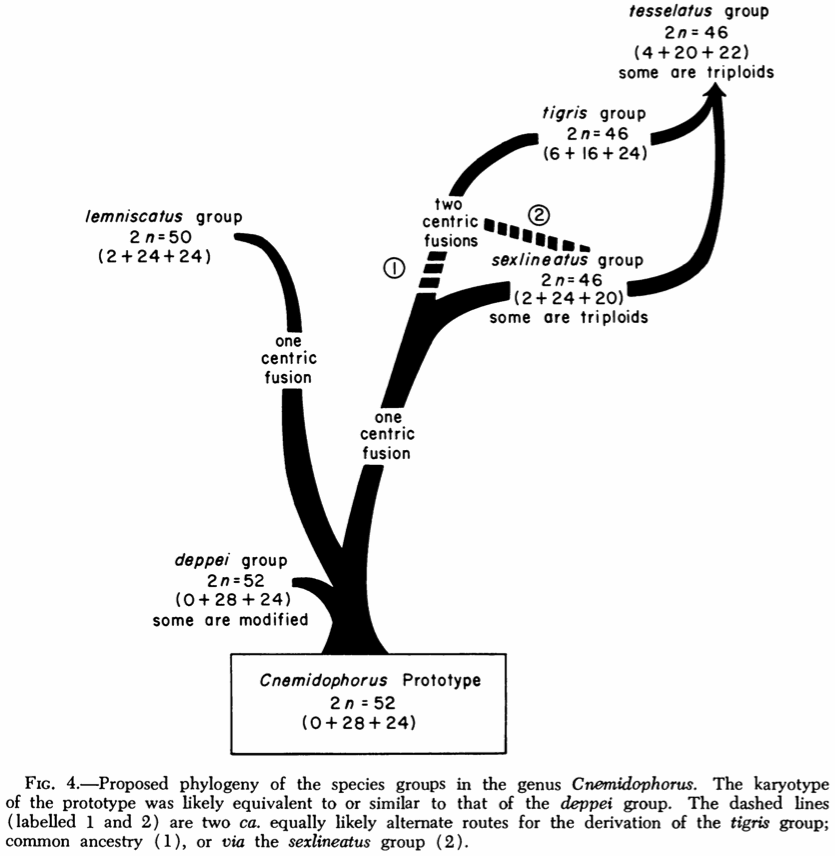
Lowe C.H., Wright J.W., Cole C.J., Bezy R.L. (1970) Chromosomes and evolution of the species groups of Cnemidophorus (Reptilia: Teiidae). Systematic Zoology 19: 128-141.
Available from JStor.


Mikelsaar R. (1987) A view of early cellular evolution. Journal of Molecular Evolution 25: 168-183.
Available from Springer.


Monday, November 5, 2012

Relationship trees drawn like real trees


Charles Darwin (1859) introduced the "Tree of Life" as a simile, which has since become very popular as a metaphor for phylogenetic relationships, especially among the general public. Darwin seems to have named his simile after its biblical namesake, and in doing so he "mobilized one of the oldest and richest traditions of imagery available to him. To play consciously on religious tree imagery was no new trick ... but still it helped Darwin to seize the imagination of his readers" (Hellström 2011).

However, this simile was quite independent of Darwin's diagrams, because he always referred to his theory as "descent with modification" (see Penny 2011). Darwin referred to the Tree of Life at the end of the chapter containing his bush-like phylogenetic figure (see this image), and later he referred to relationships as being "somewhat like the branches of a tree", but neither of these was a direct reference to any diagram.

Moreover, the original  biblical tree was actually the lignum vitae (Tree of Eternal Life) not the arbor vitae (Tree of Life). It was explicitly contrasted with the lignum scientiae boni et mali (Tree of Knowledge of Good and Evil). Genesis tells us that Adam and Eve were exiled from the Garden of Eden after eating a fruit from the Tree of Knowledge of Good and Evil, to prevent them from also eating from the Tree of Eternal Life (as humans, they apparently were not allowed to have both eternal life and moral knowledge).

This distinction between different trees is important historically, because prior to Darwin the biblical tree imagery had already been co-opted to refer to the arbor scientiae (Tree of Knowledge), rather than the lignum scientiae. That is, knowledge could be arranged like the branches of a tree; and indeed, that metaphor has come down to us today when referring to the different "branches" of human knowledge (e.g. branches of science). For example, Joachim of Fiore used the tree as a metaphor for historical relationships in his Liber Figurarum (1202) (Hestmark 2000); and in his book Arbor Scientiae (1295) Ramón Llull used it to illustrate the growth and inter-relationships of knowledge (Gontier 2011, Kutschera 2011).

This imagery has not escaped biologists, of course. The first person to suggest a systematic arrangement of all organisms in the image of a tree is reported to be Peter Simon Pallas, in his Elenchus Zoophytorum (1776) (Ragan 2009); and since that time biological relationships have often been depicted literally using a tree. Prior to Darwin, however, none of this imagery had anything to do with evolutionary relationships. Indeed, in the time between the early evolutionary work of Jean-Baptiste Lamarck and that of Charles Darwin (50 years later), several people drew trees without expressing any belief in evolution. Some of these pre-Darwinian "relationships drawn as trees" are illustrated here, showing just how broad were the purposes for which they were used. (Many other  metaphors were also used for the same purpose during the same time, of course.)

Trees in Biology

Augustin Augier (1801) is usually credited with producing the first such tree (Stevens 1994, Archibald 2009, Ragan 2009, Gontier 2011, Tassy 2011). It depicts the natural relationships of all of the plant groups known at the time, based on several parts of the flower. The taxonomic groups label the nodes, with genera labelling the leaves. As noted by Stevens (1994): "Families on different branches of the tree, but in a similar position, showed the 'relationship of analogy', while the 'relationship of proximity' occurred between different families on the same branch." The tree thus illustrates increasing structural perfection from bottom to top, on which Augier based his taxonomic classification.

Analogy and proximity relationships of the plant kingdom,
from Augier (1801). The analogy relationships are indicated by stars.

It is perhaps worth noting here that this appears to be the first diagram of relationships published after those of Buffon (see this blog post) and Duchesne (see this post), and it is thus the first one depicting non-reticulating relationships as well as the first one not representing genealogical history. Indeed, Augier noted that although it is "like a genealogical tree" he accepted the pattern as coming from the Creator rather than genealogy. Augier states that he developed the tree idea after first trying to organize the families of plants according to a scale of perfection (a Scala Naturae, see this blog post), but failing.

Some years later, Nicolas Charles Seringe (1815) produced a tree that represented, instead, the characters of a dichotomous identification key (Stevens 1994). This referred solely to the known Swiss species of Salix (willows). The branch labels indicate the two character states being compared at each step in the key, starting at the base, with the species labels finally appearing on the leaves. Identification keys are no longer drawn like this, but it is an interesting visual device.

Identification key to the species of Swiss willows, from Seringe (1815).

Carl Edward von Eichwald (1829) published a tree of animal life that is often assumed to be a depiction of the tree suggested by Pallas in 1776, as mentioned above (Ragan 2009). Only a zoologist could illustrate a leafless bunch of asparagus spears suspended in an aquatic wasteland, and treat it as a tree! The Roman numerals label the primary animal types. As noted by Ragan (2009), Eichwald considered that: "the first type arose from abundant 'globules of primitive mucus', followed by the others in temporal succession, each a branch off from, and elevated in relation to, the previous type".

A tree of animal life, from Eichwald (1829), p. 41.

Edward Hitchcock (1840) produced a paleontological chart of the plant and animal kingdoms, which incorporated fossil time into the illustration of relationships (Archibald 2009, Ragan 2009, Gontier 2011), which had not been done before. Actually, not much is shown about relationships in the diagram, since few of the branches are connected other than at the base, but the extinction of fossil groups in different strata is clearly indicated, and the branch widths indicate the relative number of species at the different geological times. Interestingly, Hitchcock withdrew this diagram from the later editions of his book, immediately after Darwin published his similar bush-like figure in 1859, in opposition to its use to depict evolution, "arguing that evolution could not be the mechanism for change that he saw in the fossil record" (Archibald 2009).

The fossil history of plants and animals,
from the 8th (1852) edition of Hitchcock (1840).

Heinrich Georg Bronn (1858) published another tree of animals based on the fossil record, albeit this time a theoretical one (Archibald 2009, Ragan 2009, Gontier 2011, Tassy 2011). The letters depict the various sequences of increasing organizational perfection of the animal groups through fossil time. As noted by Archibald (2009): "Bronn seems to have been most concerned with addressing the idea that although there was a trend toward perfection, less perfect forms kept branching even after more perfected forms had appeared". Later, Bronn was responsible for the first translation of Darwin's book into German (with his own commentary and a chapter of his own criticisms!).

Tree-shaped image of the animal system,
from Bronn (1858), p. 481.

Trees in Linguistics

Finally, it is worth pointing out that the situation was somewhat different within the study of linguistics. The analysis of biological and linguistic relationships has much in common (Atkinson and Gray 2005), and similar techniques have been developed at similar times in both disciplines but quite independently of each other. In particular, phylogenetic trees have been developed both for the study of the historical development of languages and for biological relationships.

However, one way in which the development of trees in linguistics differed from that in biology is that some explicitly genealogical tree diagrams appeared before 1859. Here are two examples (see Gontier 2011).

[Update: see the subsequent blog post An early tree of languages.]

Priestly (1975) notes that it was apparently František Ladislav Čelakovský who drew the first genealogical diagram in linguistics, depicting a history of the Slavic languages, which was published posthumously in 1853. This may thus count as the first phylogenetic tree in the modern sense of the word (i.e. it is interpreted exactly as would be a modern phylogenetic tree).

A history of the Slavic languages, from Čelakovský (1853), p 3.

However, it was August Schleicher who is usually credited with popularizing the use of phylogenetic trees in historical linguistics, starting with a short note in 1853 concerning the historical development of the Indo-Germanic language family. He published a more extensive account in 1861 (before he had read Bronn's translation of Darwin's book), and then in 1863 clearly linked his own work with Darwin's evolutionary ideas (Gontier 2011).

The development of the Indo-Germanic language family,
from Schleicher (1853), p. 787.

In biology, similar "relationships drawn as trees" representing genealogy were not published until 1866, by Ernst Haeckel (see this previous blog post).

References

Archibald J.D. (2009) Edward Hitchcock’s pre-Darwinian (1840) "Tree of Life". Journal of the History of Biology 42: 561-592.

Atkinson Q.D., Gray R.D. (2005) Curious parallels and curious connections: phylogenetic thinking in biology and historical linguistics. Systematic Biology 54: 513-526.

Darwin C. (1859) On the Origin of Species by Means of Natural Selection. Murray, London.

Gontier N. (2011) Depicting the Tree of Life: the philosophical and historical roots of evolutionary tree diagrams. Evolution, Education and Outreach 4: 515-538.

Hellström N.P. (2011) The tree as evolutionary icon: TREE in the Natural History Museum, London. Archives of Natural History 38: 1-17.

Hestmark G. (2000) Temptations of the tree. Nature 408: 911.

Kutschera U. (2011) From the scala naturae to the symbiogenetic and dynamic tree of life. Biology Direct 6: 33.

Penny D. (2011) Darwin’s theory of descent with modification, versus the biblical Tree of Life. PLoS Biology 9: e1001096.

Priestly T.M.S. (1975) Schleicher, Čelakovský, and the family-tree diagram: a puzzle in the history of linguistics. Historiographica Linguistica 2: 299-333.

Ragan M. (2009) Trees and networks before and after Darwin. Biology Direct 4: 43.

Stevens P.F. (1994) The Development of Biological Systematics: Antoine-Laurent de Jussieu, Nature, and the Natural System. Columbia Uni. Press, New York.

Tassy P. (2011) Trees before and after Darwin. Journal of Zoological Systematics and Evolutionary Research 49: 89-101.

Sources of the figures

Augier A. (1801) Essai d'une Nouvelle Classification des Végétaux. Bruyset Aîné, Lyon.

Bronn H.G. (1858) Untersuchungen über die Entwickelungs-Gesetze der Organischen Welt. E. Schwiezerbart'sche, Stuttgart.

Čelakovský F. (1853) Čtení o Srovnávací Mluvnici Slovanské na Universitě Pražskě. F. Řivnáče, Prague.

Eichwald C.E. von (1829) Zoologia Specialis quam Expositis Animalibus. Josephus Zawadzki, Vilnae.

Hitchcock E. (1840) Elementary Geology. Adams, Amherst.

Schleicher A. (1853) Die ersten Spaltungen des Indogermanischen Urvolkes. Allgemeine Monatsschrift für Wissenschaft und Literatur 1853: 786-787.

Seringe N.C. (1815) Essai d'une Monographie des Saules de la Suisse. Maurhofer and Dellenbach, Berne.

Wednesday, May 30, 2012

Networks of genealogy


Phylogenetic trees, indicating evolutionary relationships among organisms, are usually considered to have derived, to one extent or another, from the concept of a family tree or pedigree (also called genealogy, généalogie, stammbaum, stamboom or levensboom, depending on your language), which depict the lineal descent from some single specified human ancestral couple. However, these diagrams are only trees if one sticks to lineal descent, historically usually the patrilineal lineage. As soon as one includes the (many) matrilinear lines, the diagram becomes a network, with inter-connections between different family trees. [See the later post Family trees, pedigrees and hybridization networks.]

When creating the first two published phylogenetic networks, this seems to have been the idea of both Buffon (1755) and Duchesne (1766). They each observed hybridization histories (in dogs and strawberries, respectively), and they drew diagrams showing both the male and female parents (presumably without knowing which was which). Thus, they apparently saw themselves as doing nothing unusual, and neither did their contemporaries. They were simply drawing pedigrees in which both the matrilineal and patrilineal relationships were shown.

It is only with historical hindsight that we can see that they did something conceptually new. The "usual" family genealogies showed (and still do show) predominantly the male lineages (which keep the family name, and thus are easier to trace), with the female lineages apparently appearing from nowhere at the point where they marry into the male lineage. What both Buffon and Duchesne did was show that both the male and female lines came from within the same group of organisms. (In modern parlance, this was both biologically more informative and politically more correct.)

However, this new idea was restricted to within-species relationships (dog breeds and strawberry cultivars), thus emphasizing the close conceptual relationship to a pedigree of individuals. The idea that reticulating evolutionary relationships might occur between species (possibly members of different higher taxonomic groups) was apparently not something that either Buffon or Duchesne considered.

Lamarck (1809) appears to have been the first to consider supra-species evolution, and he used a non-reticulating tree for his diagram rather than a reticulating network. His published trees differ from our modern diagrams in having contemporary higher-level taxonomic groups at both the internal and external nodes, so that each tree represents a transformation series among the groups (based on morphoclines). Thus, his trees were based on the idea of descent with modification but do not match our modern trees. (Basically, Lamarck did not believe in extinction, and thought that the disappearance of species was due to their transformation into new species.) The animal tree of Barbançois (1816) and the pre-Darwinian ornithology trees of Strickland (1841) and Wallace (1856) are direct descendants of this type of tree (see O'Hara 1988, Tassy 2011).

Darwin (1859) is usually credited as being the originator of modern phylogenetic trees, with contemporary taxa at the leaves and ancestors at the internal nodes. (Darwin firmly believed in extinction, so that the internal tree nodes represented the extinct ancestors of modern species.) However, he never published an empirical tree (although one appears in his notes and another in his letters); and it was left to Hilgendorf (1863), Mivart (1865), Gaudry (1866) and Haeckel (1866) to provide the first published ones. [This later blog post discusses the history of these first trees.]

The point of this long dissertation is that from 1750, when Vitaliano Donati first suggested that biological relationships might be represented as a network, almost all of the relationship diagrams were either (i) networks showing non-genealogical affinity, (ii) trees showing non-genealogical affinity (eg. those of Agassiz, Augier, Bronn, Hitchcock), or (iii) trees showing genealogy (eg. those of Gaudry, Haeckel, Hilgendorf, Lamarck, Mivart) (see Stevens 1994, Ragan 2009, Tassy 2011). Networks showing genealogy at the species level or above were notably absent.

This situation appears to have lasted until 1888. In that year Ferdinand Pax published a revision of the plant genus Primula. In it he provided 14 diagrams illustrating the relationships among the species within each section of the genus, plus one diagram illustrating the relationships among the sections. Almost all of these diagrams are networks rather than trees, as they show complex reticulating relationships. These are affinity networks as they do not represent genealogies, with three exceptions.

Page 186, Section Vernales.
Click to enlarge.

The figures on pages 186, 202 and 233 all explicitly indicate hybridization relationships among the species. The hybrid species are indicated by a cross (rather than a circle), and they are connected to their nominated parents by dashed lines (as used by both Buffon and Duchesne). Some of the suggested relationships are quite complex, with two hybrid species deriving from the same parents.

Page 202, Section Farinosae.
Click to enlarge.

This thus seems to be the first publication of a hybridization network involving species rather than sub-specific relationships. Quite why it took more than 130 years from Buffon's innovation to take this next step is not clear. Perhaps it had something to do with the contemporary focus on genealogical trees of animals, particularly vertebrates, which traditionally have been considered to show little evidence of inter-specific hybridization (unlike plants, where there is considerable evidence).

Page 233, Section Auricula.Click to enlarge.

It seems to me to be important to emphasize the historical distinction between affinity and genealogy networks. This distinction continues in phylogenetic networks today, with rooted networks explicitly representing genealogy and unrooted networks representing similarity of a more general sort. Almost all of the published phylogenetic networks of the past 20 years have been unrooted, and therefore logically cannot represent historical relationships. (The root indicates the time direction of the genealogy, and time goes in only one direction, so that we have Time's Arrow not Time's Boomerang.) These unrooted networks can be (and usually are) a valuable tool for helping to understand phylogenetic history, but they do not represent evolution directly.

For examples of genealogy networks published later, see Phylogenetic networks 1900-1990.

References

Barbançois, Charles-Hélion de (1816) Observations sur la filiation des animaux, depuis le polype jusqu'au singe. Journal de Physique, de Chimie, d'histoire Naturelle et des Arts 82: 444-448.

Buffon, Georges-Louis Leclerc, comte de (1755) Histoire Naturelle Générale et Particulière, tome V. Imprimerie Royale, Paris.

Darwin, Charles Robert (1859) On the Origin of Species. John Murray, London.

Donati, Vitaliano (1750) Della Storia Naturale Marina dell' Adriatico. Francesco Storti, Venezia.

Duchesne, Antoine Nicolas (1766) Histoire Naturelle des Fraisiers. Didot le jeune & C.J. Panckoucke, Paris.

Gaudry, Albert (1866) Considérations Générales sur les Animaux Fossiles de Pikermi. F. Savy, Paris.

Haeckel, Ernst Heinrich (1866) Generelle Morphologie der Organismen. Reimer, Berlin.

Hilgendorf, Franz Martin (1863) Beiträge zur Kenntniß des Süßwasserkalkes von Steinheim. Unpublished PhD Dissertation. Philosophische Fakultät, Universität Tübingen, 42 pp.**

Lamarck, Jean-Baptiste de Monet, chevalier de (1809) Philosophie Zoologique. Dentu et l'Auteur, Paris.

Mivart, St George Jackson (1865) Contributions towards a more complete knowledge of the axial skeleton in the Primates. Proceedings of the Zoological Society of London 33: 545-592.

O’Hara, Robert J. (1988) Diagrammatic classifications of birds, 1819-1901: views of the natural system in 19th-century British ornithology. In: H. Ouellet (ed.) Acta XIX Congressus Internationalis Ornithologici, pp. 2746-2759. National Museum of Natural Sciences, Ottawa.

Pax, Ferdinand Albin (1888) Monographische übersicht über die arten der gattung Primula. Botanische Jahrbücher für Systematik, Pflanzengeschichte und Pflanzengeographie 10: 75-241.

Ragan, Mark (2009) Trees and networks before and after Darwin. Biology Direct 4: 43.

Stevens, Peter F. (1994) The Development of Biological Systematics: Antoine-Laurent de Jussieu, Nature, and the Natural System. Columbia Uni. Press, New York.

Strickland, Hugh Edwin (1841) On the true method of discovering the natural system in zoology and botany. Annals and Magazine of Natural History 6: 184-194.

Tassy, Pascal (2011) Trees before and after Darwin. Journal of Zoological Systematics and Evolutionary Research 49: 89-101.

Wallace, Alfred Russel (1856) Attempts at a natural arrangement of birds. Annals and Magazine of Natural History 18: 193-216.

** See this later post for information about this thesis.
[This was read as a paper before the Royal Prussian Academy of Sciences on July 19 1866, and was then published separately as:
   Hilgendorf F. (1866) Planorbis multiformis im Steinheimer Süßwasserkalk. Ein Beispiel von Gestaltveränderung im Laufe der Zeit. Buchhandlung von W. Weber, Berlin, 36 pp.
The paper then appeared as a regular part of the Academy's journal:
   Hilgendorf F. (1867) Über Planorbis multiformis im Steinheimer Süsswasserkalk. Monatsberichte der Königliche Preussischen Akademie der Wissenschaften zu Berlin 1866: 474-504.
So, you can take your pick as to the formal publication date of the tree.]

Tuesday, May 22, 2012

Networks of affinity rather than genealogy


To date, published phylogenetic networks have been of two distinct types: (i) non-directional networks showing affinity among taxa, and (ii) directed networks showing genealogical relationships among taxa. In previous posts I have discussed what are apparently the first two networks of the latter type (1755 and 1766), which illustrate hybridization relationships among domesticated breeds / cultivars.

Today, I wish to point out that the vast majority of the networks published from 1750-1900 were actually of the first type. Indeed, the third explicitly genealogical network appears to date from 1888, whereas more than a dozen networks of the affinity type are known.

There is little point in trying to formally define what biologists have meant by "affinity", since it seems to vary greatly. However, it has usually referred to some sort of attraction or connection between taxa (and their characteristics), sometimes described as similar to the laws regulating the combinations of elements that form compounds in chemistry. It has usually been the basis of some sort of "natural system" of classification (as opposed to some artificial grouping of organisms, eg. utilitarian): "an arrangement that groups organisms of the same kind more closely to each other than either of them is to any organism of another kind" (Cuvier 1817). In modern terminology, affinity originally included evaluation of both homology and analogy, and therefore affinity was a more general relationship than evolutionary history, and it does not necessarily correlate well with it. Genealogy also appears to be a much looser form of connection between taxa than was originally imagined by some of the seekers of affinity connections.

The important point here, however, is that affinity was usually imagined as being multi-facetted, so that any diagram of affinities showed multiple connections among the taxa: relationships between groups were very definitively reticulating, and it was considered impossible to form a linear series because emphasizing a relationship in one direction necessarily entailed simultaneously breaking relationships in another (de Jussieu 1843; see Stevens 1994 p. 98). Hence, the diagrams were networks rather than trees. (Trees have a long history as a metaphor for arranging human ideas, but not for representing affinity; Gontier 2011.) Indeed, network diagrams may out-number tree illustrations from 1750-1900 (Stevens 1994, Ragan 2009, Tassy 2011), if one excludes dichotomous keys for the identification of taxa. These network diagrams lacked any directionality, as affinities between taxa were considered to be symmetrical (unlike genealogical relationships). Notably, when interpreting their diagrams the authors either fail to mention genealogy, or they implicitly or explicitly exclude it.

The importance that I see in these historical networks is that they match closely the modern idea of unrooted data-display networks. They are not a form of exploratory data analysis, of course, because they were intended to express the author's ideas about biological relationships rather than to reveal previously unquantified patterns in the data; but they certainly are not rooted evolutionary networks. Thus, the dichotomy that I see in contemporary usage of the expression "phylogenetic network" apparently has a long history, and it needs to be recognized. (There are also all sorts of other historical representations of reticulate relationships, some intended to be solid figures with faces, others were interlocking circles or radiating hexagons or nested ovals, and some were explicitly referred to as maps. Most of these could be converted to a network representation.)

Affinity Networks

[Note: the following list has been updated in a later blog post: Affinity networks updated]

Here is a list of the publications from 1750-1900 containing affinity networks that I know about. I have indicated my source, and I have also linked to an online copy of the diagram. (I have extracted some of the figures from Gallica, Google Books or the Biodiversity Heritage Library, where they are otherwise unavailable.)

  • 1774 Johann Philipp Rühling "Ordines Naturales Plantarum Commentatio Botanica" [Ragan Fig. 7, Stevens Fig. 12]
  • 1783 Johann Hermann "Tabula affinitatum animalium" [Ragan Fig. 8]
  • 1802 August Johann Georg Carl Batsch "Tabula Affinitatum Regni Vegetabilis" [Ragan Fig. 9]
  • 1825 Adrien-Henri-Laurent de Jussieu "Sur le groupe des Rutacées." Mémoires du Muséum d'Histoire Naturelle 12: 384-542 [Ragan Fig. 13, Stevens Fig. 10]
  • 1826 Augustin-Pyramus de Candolle "Mémoires sur la Famille des Légumineuses. Quatrième Mémoire. Division de la Famille des Légumineuses" [Stevens Fig. 14]
  • 1841 Eduard Fenzl "Darstellung und Erläuterung vier minder bekannter, ihrer Stellung im natürlichen Systeme nach bisher zweifelhaft gebliebener, Pflanzen-Gattungen." Denkschriften der Königlich-Baierischen Botanischen Gesellschaft zu Regensburg 3: 153-270 [Stevens, figure]
  • 1843 Adrien-Henri-Laurent de Jussieu "Monographie de la famille des Malpighiacées." Archives du Muséum d'Histoire Naturelle 3: 5-151 [Stevens, figure]
  • 1872 Alexander Andrejewitch von Bunge "Die gattung Acantholimon Boiss." Mémoires du Academie Imperiale des Sciences de St Pétersbourg Série 7 18(2): 1-72 [Stevens Fig. 19]
  • 1873 George Bentham "Notes on the classification, history, and geographical distribution of Compositae." Botanical Journal of the Linnean Society 13: 335-577 [Stevens Fig. 20]
  • 1888 Ferdinand Albin Pax "Monographische übersicht über die arten der gattung Primula." Botanische Jahrbücher für Systematik, Pflanzengeschichte und Pflanzengeographie 10: 75-241 [Stevens, there are 15 figures]
  • 1889 Julien Vesque "Epharmosis, sive Materiae ad Instruendam Anatomiam Systematis Naturalis. Pars Prima. Folia Capparearum" [Stevens, figure]
  • 1889 Julien Vesque "Epharmosis, sive Materiae ad Instruendam Anatomiam Systematis Naturalis. Pars Secunda. Genitalia Foliaque Garciniearum et Calophyllearum" [Stevens, figure]
  • 1890 Franz Georg Philipp Buchenau "Monographia Juncacearum." Botanische Jahrbücher für Systematik, Pflanzengeschichte und Pflanzengeographie 12: 1-495 [Stevens, figure]
  • 1893 Georg Klebs "Flagellatenstudien, Theil II." Zeitschrift für Wissenschaftliche Zoologie 55: 353-445 [Ragan Fig. 26]
  • 1895 Olga Tchouproff "Quelques notes sur l'anatomie systématique des Acanthacées." Bulletin de l'Herbier Boissier 3: 550-560 [Stevens, figure]
  • 1896 Nicolai Ivanovich Kusnezov "Subgenus Eugentiana Kusnez. generis Gentiana Tournef." Acta Horti Petropolitani 15: 1-507 [Ragan, Stevens Fig. 18]
  • 1898 Émile Constant Perrot "Anatomie comparée des Gentianacées." Annales des Sciences Naturelles: Botanique, Série 8, 7: 105-292 [Stevens, figure]

It seems important to note that these affinity networks continued to be produced after 1859, when phylogenetic trees in the modern context were introduced by Charles Darwin (ie. internal nodes represent ancestors and the leaves represent existing taxa). Clearly, affinity and genealogical inheritance did not become synonymous concepts until much later.

Also, other early authors described biological relationships as being like a reticulating network, without any necessarily genealogical interpretation, even though they apparently did not themselves produce network diagrams. (It seems that only 5 of the first 11 historical references to network relationships provided a diagram.) Here are some known examples (with source):

  • 1750 Vitaliano Donati "Della Storia Naturale Marina dell' Adriatico" [Ragan]
  • 1792 Giuseppe Olivi "Zoologia Adriatica" [Ragan]
  • 1802 Gottfried Reinhold Treviranus "Biologie, oder Philosophie der Lebenden Natur für Naturforscher und Aerzte, Band 1" [Ragan]
  • 1824 Johann Heinrich Friedrich Link "Elementa Philosophiae Botanicae" [Stevens]
  • 1828 Georges Cuvier "Histoire Naturelle des Poissons, Tome Premier" [Ragan]
  • 1836 Constantin Rafinesque "Flora Telluriana" [Stevens]

Note that it was apparently Vitaliano Donati who, 5 years before Buffon drew his dog genealogy, first suggested that biological relationships are like a network, although he did not provide an explicit diagram to illustrate this idea.

References

Cuvier G. (1817) Le Règne Animal Distribué d'Après son Organisation, Tome Premier. Deterville, Paris.

de Jussieu A.-H.-L. (1843) Cours Elémentaire d'Histoire Naturelle. Fortin Masson et Langlois & Leclerc, Paris.

Gontier N. (2011) Depicting the Tree of Life: the philosophical and historical roots of evolutionary tree diagrams. Evolution: Education and Outreach 4: 515-538.

Ragan M. (2009) Trees and networks before and after Darwin. Biology Direct 4: 43.

Stevens P.F. (1994) The Development of Biological Systematics: Antoine-Laurent de Jussieu, Nature, and the Natural System. Columbia Uni. Press, New York.

Tassy P. (2011) Trees before and after Darwin. Journal of Zoological Systematics and Evolutionary Research 49: 89-101.